Survey of digital heritage interpretation: please join in!
 Facebook, Twitter, YouTube and Blogger are but a few examples of online social media that our modern society can no longer imagine doing without. Within heritage circles, they are also increasingly used to put specific projects in the spotlight.
To gain a better insight into whether and how these media can add value to heritage interpretation, we would like to call upon your experience. We therefore invite you to participate in an online survey that was developed by the Ename Center in collaboration with the MICT research group of Ghent University.
The online survey can be found at http://www.mict.be/onderzoek
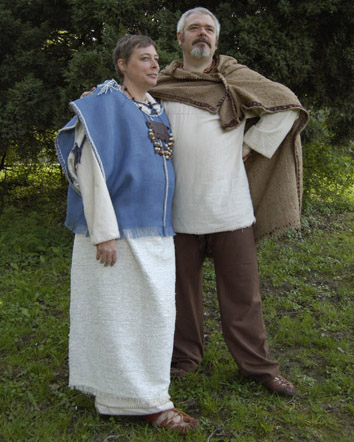
The Celts continue to stir our imagination, but far too often we seem to be having a rather stereotypical representation of what they looked like. Archaeologists in Europe have now discovered quite a few new elements, especially related to the period around the fifth century Before our Common Era. These findings could readjust our mental picture, e.g. about the way the Celts dressed.
In Flanders, the Kemmelberg was an important ‘aristocratic hillsite’, such as the Mont Lassois in France or the Heuneburg in Germany. The Ename Center has been commissioned by the Province of West-Flanders to coordinate and integrate the various Task Force Kemmelberg educational initiatives.
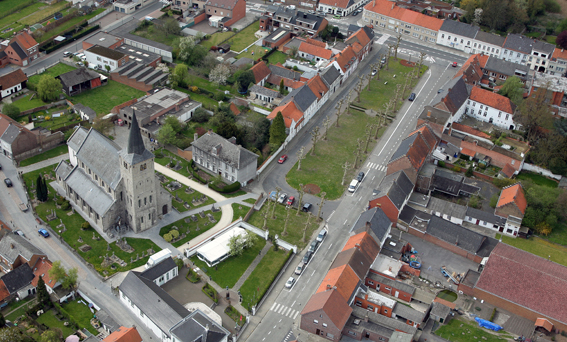 The Ename Center for Public Archaeology and Heritage Presentation started to bring Francia Media to the attention of the European institutions in 2008.
Francia Media saw the light of day in 843, at the time of the Treaty of Verdun, when the former empire of Charlemagne was split into three parts: East and West Francia, which would later become Germany and France respectively, and in between Middle Francia or Francia Media.
Over the next 5 years, 20 organisations from 11 different countries will work on the Cradles of European Culture project, which was approved under the European 2007-2013 cultural programme.